Last updated: October 25, 2026
Key Takeaways
- Start with the AI draft, a short sample of your writing, and the piece’s job.
- Edit for recurring habits, not by trying to make every sentence sound human.
- Fix structure before line editing so the argument makes sense first.
- Use a few style rules to stay consistent without flattening the writing.
What you need before you touch the draft
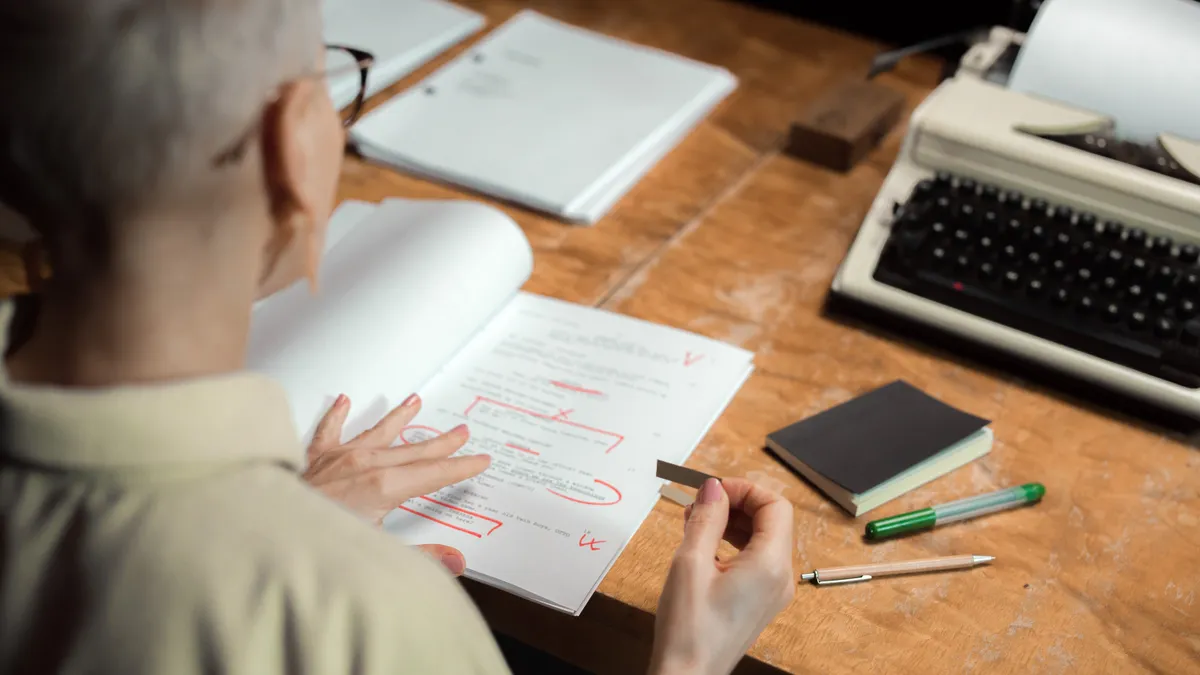
How to edit AI writing without losing your voice starts with three things: the AI draft, one short sample of your own writing, and a clear idea of the job the piece must do. A 300-word article sample, an email, or a past post is enough if it actually sounds like you.
Start with a reference that shows your voice in normal use, not your most edited work. A polished keynote transcript is less useful than a plain paragraph you wrote on a deadline. You want the habits that repeat: sentence length, how often you use contractions, whether you prefer blunt nouns or softer phrasing, and how directly you state conclusions.
Then decide what the piece is for. A tutorial, a landing page, and a thought piece should not sound identical, even if they share the same author. If the piece needs to be sharp and practical, your voice should support that. If it needs authority, your voice may be firmer and less playful. Editing without this boundary is how drafts drift into generic “helpful content” that could belong to anyone.
Keep a second window open for fact checking. AI drafts often sound complete before they are complete. A sentence can be smooth and still be wrong, vague, or unsupported. If the piece mentions a date, a standard, a policy, or a product detail, flag it before you spend time polishing the prose.
The goal is not to defend every AI phrase. It is to establish a baseline so you know what should survive. A good voice reference is short, plain, and honest enough to reveal your actual habits.
How do I make AI writing sound like me?
You make AI writing sound like you by editing for your recurring choices, not by trying to “humanize” every sentence. The quickest way is to compare the draft against 2 or 3 short pieces you already wrote and mark the differences that happen most often.
Use this 5-step pass in order:
- Read the draft aloud once. Mark any sentence you would not naturally say in conversation, even if it is technically correct. The result you want is a page full of sentences you can say without stumbling.
- Highlight your own signature moves. Look for habits such as short declarative openings, one-sentence paragraphs, semicolons, em dashes, or a blunt final line. If your writing usually uses a direct “Here’s the problem” setup, keep that pattern. If you rarely write like that, do not force it.
- Replace generic phrasing with your exact wording. Swap “in the modern era” for a phrase you actually use, or cut it entirely. If your voice is plainspoken, a 12-word sentence can do more than a polished 28-word one.
- Trim the safety padding. Remove hedges such as “it may be worth considering” when the point is already clear. The result should be tighter sentences and fewer filler transitions.
- Check the ending of each paragraph. AI drafts often end with a summary line that sounds dutiful instead of purposeful. Replace those endings with a conclusion, an example, or a specific next action.
The test is simple: if a reader who knows your work could identify you from the rhythm, not just the topic, the edit is working. If the draft sounds flatter after every pass, you are probably sanding off the very habits that make it yours.
One honest trade-off matters here. The more idiosyncratic your voice, the more you have to resist “cleaning” it into sameness. A tidy but anonymous paragraph is easy to produce. A recognizable one often keeps a few sharp edges.
Edit for structure before you polish lines
You should fix the structure before line editing because a broken order makes every sentence look worse. A draft can be beautifully phrased and still fail if the argument arrives in the wrong sequence or repeats the same point twice.
Start by labeling the job of each paragraph in the margin: setup, proof, example, caution, or takeaway. On a 1,200-word draft, a paragraph that does two jobs at once often needs to be split. A paragraph that does no clear job usually needs to go.
Then look for the three structural problems AI drafts produce most often:
- Front-loaded explanation. The draft explains before it answers. Move the answer into the first paragraph so the reader gets orientation in 2 or 3 sentences, not 2 or 3 screens.
- Looping paragraphs. Two sections say nearly the same thing with different wording. Keep the stronger one and cut the duplicate.
- Abrupt transitions. The draft jumps from one idea to another without showing why the next point belongs. Add a bridge sentence that names the connection.
If you are editing a piece meant for a blog or article, aim for one idea per section and one main claim per paragraph. That discipline matters more than poetic polish. Readers forgive plain language. They do not forgive confusion.
This is also where you decide what the piece is not trying to do. A draft that tries to explain voice, fact checking, style consistency, and revision history all at once will feel overloaded. If the piece has to answer one query, keep the path narrow. The cleaner the structure, the less pressure there is on each sentence to do everything.
The trade-off is simple: a more linear draft may feel less “creative” in outline form, but it usually reads more like a real person once the prose is tightened. A confused structure can’t be rescued by prettier lines.
How to keep voice while fixing style consistency
You keep style consistency by editing against a small set of rules, not by flattening every sentence into the same shape. A voice can stay distinct and still be consistent if the same choices repeat: point of view, level of formality, sentence length, and how direct the writer is with conclusions.
Write down 5 style rules before you edit the draft. For example:
- Use first person singular or no first person at all.
- Keep most sentences under 25 words.
- Use contractions in plain explanation.
- Avoid three stacked adjectives.
- End sections with a clear point, not a vague flourish.
That list gives you something concrete to check against. Without it, “consistency” becomes a feeling, and feeling is a poor editor. If the draft wanders from crisp to chatty to academic in the same page, readers notice the drift even if they cannot name it.
However, the safest way to spot inconsistency is usually to compare the first third of the piece with the last third. AI writing often starts confident and becomes more padded as it continues. One section may sound like a concise writer; the next may sound like a brochure. Match the later section to the earlier one, not the other way around.
When you find an off-brand sentence, ask whether the problem is tone or structure. A sentence can sound wrong because it is too formal, or because it is sitting in the wrong place. If the sentence is carrying the wrong job, moving it may fix more than rewriting it.
The point is not to iron every line into sameness. A bit of variation keeps writing alive. The goal is controlled variation: enough rhythm to sound human, enough discipline to sound intentional. That balance is where voice survives.
What should you fact check in AI drafts?
You should fact check every concrete claim, named entity, and implied certainty in an AI draft before you publish it. That includes product names, dates, standards, feature lists, quoted wording, and claims that sound safe because they are phrased vaguely.
The quickest method is a 3-part check:
- Names and terms. Confirm proper nouns, model names, and terminology against a reliable source.
- Numbers and dates. Verify every figure, even if it looks harmless. AI text often inserts numbers that feel plausible but are wrong.
- Claims of performance or frequency. Replace “usually,” “always,” or “most” with a weaker statement unless you can support the stronger one.
For writing about software, standards bodies, and professional methods, use primary or near-primary sources where possible. A style guide, an organization’s documentation, or a standards page is safer than a random blog post. If the draft refers to writing guidance, a source such as the Chicago Manual of Style or AP Stylebook can anchor style decisions; if it references content quality or originality, a standards or professional association source is better than a generic roundup.
For guidance on verification, consult the National Institutes of Health fact-checking resources and the U.S. Federal Trade Commission’s consumer advice on spotting misleading claims. You do not need to turn the edit into a citation hunt for every sentence. You do need to stop the piece from smuggling in false certainty. A clean paragraph with one unsupported claim is still a problem. In many cases, a factual sentence should be cut entirely if it does not help the reader complete the task.
This is the least glamorous part of the process, but it protects the rest of the edit. A voice-forward piece still fails if it is wrong. Fact checking is not separate from voice preservation; it keeps the voice trustworthy.
Line editing: the pass that makes the piece feel human
Line editing is where the piece starts to sound like a person who chose each sentence instead of a system that assembled them. This pass works best after structure and facts are settled, because otherwise you are polishing text that may still move.
Read one paragraph at a time and look for four problems:
- Repetition inside the sentence. AI drafts often say the same thing twice in different words. Keep the cleaner version.
- Abstract nouns stacked together. “Optimization,” “consistency,” and “clarity” can crowd out the actual action. Replace abstractions with verbs and specific nouns.
- Predictable sentence shapes. If every sentence starts with a subject and ends the same way, vary the rhythm. Put the key word earlier in one sentence, then use a short fragment or a delayed subject later.
- Over-explained transitions. “In addition,” “moreover,” and similar connectors can make a piece feel padded. Use them only when they earn their space.
A useful rule: if a sentence can be reduced by 20 percent without losing meaning, reduce it. On a 1,500-word draft, that kind of trimming can remove the machine-like hum without changing the message. Cut filler, not force. Keep the sentence with pressure in it.
You should also protect the places where your voice is naturally strongest. Maybe you write better in openings than in explanations, or you are strong at clear summaries. Preserve those lines. Do not even out every section until the piece has no character left.
This pass is also where you decide how much polish is too much. A voice-heavy piece can tolerate a rough edge. A sales page cannot. If the project needs authority over personality, your line edits should move toward precision. If it needs personality over formality, leave a few imperfect turns in place when they sound like you.
Common mistakes that erase voice
The biggest mistake is rewriting the piece into generic “correct” English. That costs the piece its fingerprint. The fix is to preserve recurring habits that make the writing recognizable, even when the sentence is not perfect.
A second mistake is editing only for grammar. Grammar matters, but grammar alone does not create voice. A perfectly grammatical paragraph can still sound dead. If you only correct errors, you may leave the blandest parts untouched.
A third mistake is chasing the piece’s style instead of your own. If the draft starts formal, it is easy to keep adding formal phrases until the whole piece sounds like a committee memo. Instead, pull the piece toward the style sample you chose at the start.
A fourth mistake is making every sentence “sound better” by adding flourishes. That often turns plain prose into clutter. One crisp sentence beats three decorative ones, especially in how-to writing.
The best correction is usually to edit with restraint and intent. Keep the useful sentence, not the prettiest one. Keep the voice marker, not the cliché. Keep the structure that helps the reader move forward. If a line does not serve the reader or the authorial tone, it is probably decoration.
This approach is not for people who want the AI draft to disappear completely. If the goal is a total rewrite, start from scratch instead. This method is for writers who want AI to handle the first pass and still want the final piece to sound like the person whose name is on it.
Final check before you publish
You should do one last read for voice, facts, and flow in a single pass before the draft goes live. This final check catches the places where the edit looks finished but still feels slightly off.
Read the piece aloud once from top to bottom. Listen for sentences that become too formal, too repetitive, or too smooth to be believable. Then make a 3-item sweep:
- Voice: Does the piece still sound like the same writer from the first paragraph to the last?
- Facts: Are the concrete claims still accurate after the edits?
- Flow: Does each section lead naturally into the next without obvious jumps?
If a paragraph feels weak but you cannot name why, compare it to the style sample again. Often the fix is not more editing but less: one cut, one shorter sentence, one stronger noun. That is usually enough.
A final note on judgment: this editing process works best when the writer already has a voice worth preserving. If your natural style is still developing, the goal is not to freeze it in place. It is to keep the piece from flattening out while you learn what sounds like you. That makes the process slower at first, but it also makes the final piece sound like it came from one mind, not from a template.
Drafted with AI; not yet reviewed by a person.